Cupping for back, shoulder and body pain
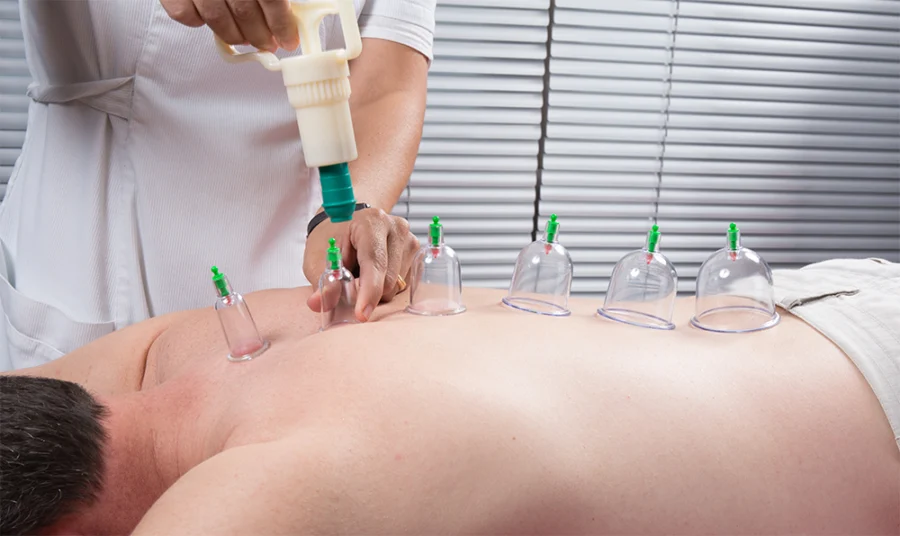
Suction cups applied along the back, shoulders and legs to release muscular tension, ease stiffness and improve circulation in areas that have been painful for months or years.
Assessed by Dr. Saeedul Hasan Siddiqui, B.I.M.S. before any treatment begins.
Patients usually come to us with
If your situation is not on this list, ask anyway — the consultation is free and Dr. Siddiqui will tell you if hijama is not the right answer.
- Lower back pain that keeps returning
- Neck and shoulder stiffness from desk work or driving
- Cervical or sciatic pain confirmed by a doctor
- Muscle tightness that massage relieves only briefly
- Heaviness and poor circulation in the legs
Suction, applied to where the tension actually sits
Cups are placed along the back, shoulders or legs and suction lifts the skin and superficial tissue beneath. This is thought to ease tight muscle bands and improve local circulation in the area. We use dry cupping (suction only) or, where Dr. Siddiqui judges it more appropriate, wet cupping with a small controlled incision. Which method, and which points, depends on where your pain actually comes from — back pain is often driven by the hips or shoulders, not only the site that hurts — which is why every session starts with an assessment rather than a fixed routine.
Who this is suitable for
- Desk workers and drivers with chronic muscular tension
- Gym users and manual workers, for recovery and stiffness
- Long-standing back, neck or shoulder pain
- Patients already having physiotherapy, as a complement to it
- The pain is from a fracture or recent acute injury
- It could be a medical emergency — this needs a hospital, not a consultation
- There is an active infection or open wound at the site
- You have a bleeding or clotting disorder
Full contraindications are listed in Safety, below.
What happens at your appointment
Nothing is done before you have been assessed, and the assessment costs nothing.
Assessment
Where the pain is, what triggers it, how long it has lasted, and any scan or diagnosis you already have.
Mapping the points
Cups are placed along the affected muscle groups and the related sunnah points, not simply where it hurts.
Session
Suction is held for 5–10 minutes per cup. Wet cupping is used for long-standing, stubborn pain when appropriate.
Aftercare
Rest, warmth and hydration for 24 hours, plus simple movement advice for the days after.
What this treatment can and cannot do
Suction lifts the tissue and eases the tight bands that keep pulling the area back into pain.
Most people report noticeably looser movement immediately after the first session.
Back pain is often driven by the hips or shoulders; the points chosen reflect that.
Clear guidance on what to avoid for 48 hours so the benefit holds.
Dry cupping vs. wet cupping
For body pain, dry cupping is usually the first option. Wet cupping is used selectively, where Dr. Siddiqui judges it more appropriate.
| Dry cupping | Wet cupping | |
|---|---|---|
| Skin | Suction only, no cuts | Suction plus small superficial incisions |
| Blood | None drawn | A small, controlled quantity drawn |
| When it’s used | Usually the first option for body pain | Used selectively, case by case |
| Invasiveness | Non-invasive | Invasive procedure, doctor-performed only |
| Aftercare | Minimal — clean and dry for 24 hours | More — dressed incision site, 24–48 hour precautions |
Read more about dry cupping and wet cupping individually.
- A firm pulling or stretching sensation as the cups take hold
- Warmth, and often an immediate looser feeling in the muscle
- Circular marks where the cups sat, fading over about a week
- Occasional soreness in the treated muscle for a day or two
- Drink plenty of water and rest the treated area
- Gentle movement and stretching are fine; avoid the gym or heavy lifting for 48 hours
- No swimming or sauna for 48 hours; keep the area clean and dry for the first 24
- Call us if you see spreading redness, heat or discharge at the site
- Session length30–40 minutes
- Typical course1–3 sessions for acute pain; reviewed for chronic pain
- MethodDry cupping, with wet cupping for long-standing pain
- AftercareNo gym, swimming or heavy lifting for 48 hours
Pricing is confirmed at your free consultation, once we know what you actually need. We do not sell fixed packages in advance.
- You take blood thinners, or have a bleeding or clotting disorder.
- You are pregnant.
- There is an active skin infection or open wound at the site.
- You have uncontrolled diabetes, severe anaemia, or are undergoing chemotherapy.
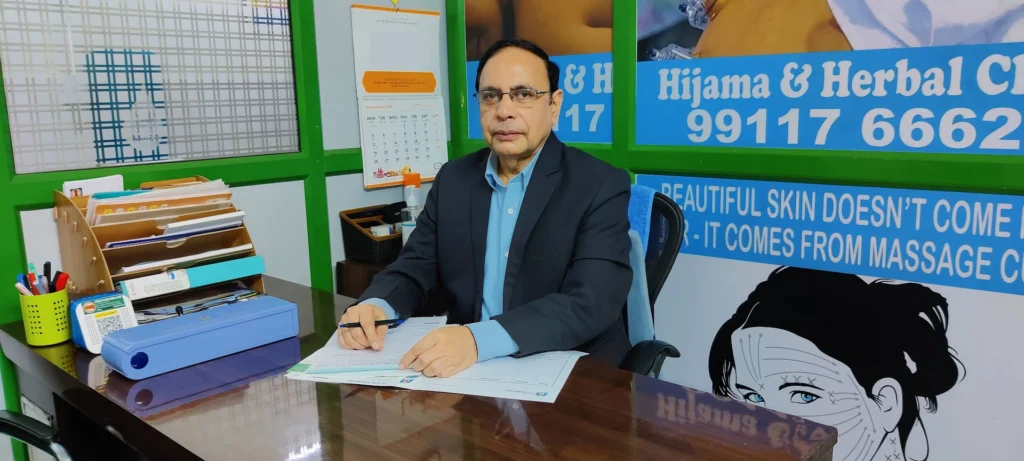
If hijama is not the right treatment for your condition, I will tell you at the consultation and refer you to a conventional doctor. I would rather lose a booking than treat someone I should not.
Dr. Saeedul Hasan Siddiqui, B.I.M.S.Cupping on the body · Practising since 1981
Dr. Saeedul Hasan Siddiqui
B.I.M.S. from Jamia Hamdard, New Delhi (1981), registered with the Delhi Bhartiya Chikitsa Parishad under the Ministry of AYUSH framework. He has practised hijama cupping in Delhi-NCR for over 40 years. No treatment for body pain is booked before he has examined you himself — including checking whether the pain is coming from somewhere other than where it hurts.
Current evidence and our clinical approach
Modern clinical research suggests cupping therapy may provide short-term relief for certain musculoskeletal conditions in some patients, though the quality of evidence varies by condition and larger trials are still needed. We view it as part of an overall management plan — often alongside physiotherapy or conventional care — rather than a universal solution, and treatment decisions are always based on an individual assessment.
Cupping on the body — your questions
Is cupping safe for a slipped disc?
Cupping does not treat the disc itself, but it can relieve the muscular spasm around it. Bring any MRI or diagnosis with you — if surgery or physiotherapy is what you need, Dr. Siddiqui will say so.
How many sessions for chronic back pain?
Acute pain often eases in one to three sessions. Pain you have had for years is usually reviewed over a longer course, with an honest assessment after the third session.
Does it hurt?
The suction feels like a firm pull rather than a sharp pain. Tenderness at the site for a day or two afterwards is normal.
Can I have cupping and physiotherapy together?
Yes, and they work well together. Tell your physiotherapist you are having cupping so exercises can be timed around it.
Can cupping help sciatica?
It may ease the muscular tension that often accompanies sciatic pain, once a doctor has confirmed the diagnosis. Bring any scan or diagnosis with you, and Dr. Siddiqui will tell you honestly whether cupping is likely to help or whether you need a different approach.
What is the difference between dry and wet cupping for body pain?
Dry cupping is suction only and is usually the first option. Wet cupping adds a small controlled incision and is used selectively, only where Dr. Siddiqui judges it more appropriate. See the comparison table above.
How soon will I feel a difference?
Many patients feel looser movement the same day. Longer-standing pain is usually reviewed over several sessions, with an honest assessment if it is not helping by the third.
What should I do after a cupping session?
Drink water, rest the area, and avoid the gym, swimming or sauna for 48 hours. Gentle stretching is usually fine. Full aftercare guidance above.
Who should avoid body cupping?
Anyone with a fracture, recent acute injury, active infection or open wound at the site, or a bleeding or clotting disorder. Full contraindications are in our safety policy.
Is it suitable for a slipped disc or sciatica confirmed by MRI?
Cupping does not treat a slipped disc itself, but may relieve the muscular spasm around it. Bring your MRI or diagnosis to the consultation — if surgery or physiotherapy is what you actually need, Dr. Siddiqui will say so rather than start cupping regardless.
Can desk workers and gym users have regular cupping?
Yes — this is one of the most common reasons patients come to us, for tension from long sitting, driving or training. We space sessions one to three weeks apart so the tissue recovers between visits.
Other things we treat
Cupping is used to increase blood flow to the scalp, so that the follicles receive more oxygen and nutrients. It is ofte…
Learn moreTargeted cupping around the knee to reduce inflammation and swelling, ease stiffness on stairs and after sitting, and im…
Learn moreA private treatment room and experienced female therapists, for women who prefer it. Used for hair fall, migraine, back …
Learn moreNot sure if hijama is right for you?
The first consultation is free and there is no obligation to book. Ask Dr. Siddiqui directly about your condition.