Hijama cupping & Unani treatment in Delhi since 1981
Doctor-led hijama cupping and Unani treatment by Dr. Saeedul Hasan Siddiqui, B.I.M.S., for pain, hair fall, migraine, joint problems and other conditions. Every patient begins with a free one-to-one consultation before any treatment is recommended.
First consultation is free · You are not obliged to book a session afterwards
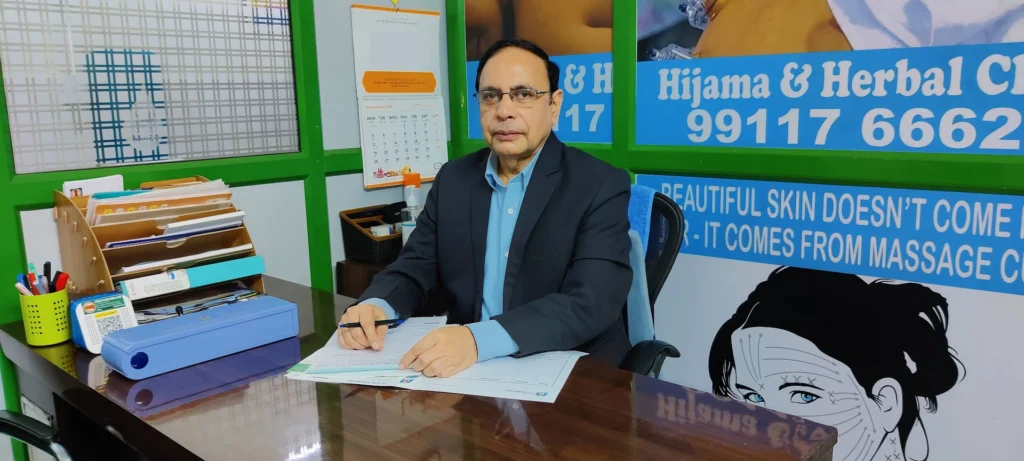
Dr. Saeedul Hasan Siddiqui
B.I.M.S. from Jamia Hamdard, New Delhi (1981), registered with the Delhi Bhartiya Chikitsa Parishad under the Ministry of AYUSH framework. He has practised hijama cupping in Delhi-NCR for over 40 years.
Every treatment plan begins with a one-to-one consultation rather than a fixed package — covering hair fall, back and joint pain, migraines and acne, alongside Unani herbal remedies where appropriate.
The patient comes before the treatment
We believe hijama should only be recommended after understanding the patient, not the condition alone. Every consultation includes a review of your symptoms, medical history, current medication and anything you have already tried. If hijama is unlikely to help, we will explain why and, where appropriate, point you towards conventional medical care instead. This is also why we do not sell fixed treatment packages in advance — pricing and course length are confirmed only once we know what you actually need.
Cupping therapy, practised as part of medicine
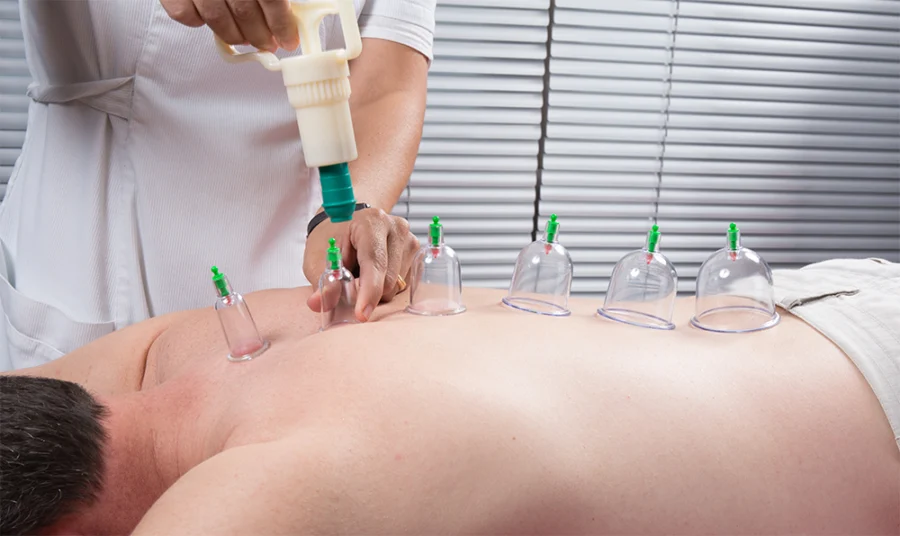
Hijama (cupping therapy) is a traditional therapeutic technique used in several medical systems, including Unani medicine. At Siddiqui Hijama Clinic we combine doctor-led assessment, traditional cupping methods and personalised Unani treatment where appropriate. Every patient is first evaluated by Dr. Saeedul Hasan Siddiqui before treatment is recommended — and if hijama is unlikely to help your condition, we explain why rather than recommend treatment you do not need.
Start with your concern
See how we approach it, what a session involves, and whether it is suitable for you.
Cupping is used to increase blood flow to the scalp, so that the follicles receive more oxygen and nutrients. …
Learn moreSuction cups applied along the back, shoulders and legs to release muscular tension, ease stiffness and improv…
Learn moreTargeted cupping around the knee to reduce inflammation and swelling, ease stiffness on stairs and after sitti…
Learn moreA private treatment room and experienced female therapists, for women who prefer it. Used for hair fall, migra…
Learn moreCupping at the upper back, shoulders and head points is used to relieve the muscular tension and circulatory c…
Learn moreGentle, small suction cups moved across the face to stimulate circulation, reduce puffiness and support skin t…
Learn moreUsed to reduce the inflammation behind acne and support the body’s own clearing processes, usually alongside U…
Learn moreTraditional Greco-Arabic herbal medicine, prescribed alongside cupping or on its own — for digestion, skin, ha…
Learn moreNothing happens before you are assessed
The consultation is free, and you are not obliged to book a session afterwards.
Free consultation
Dr. Siddiqui reviews your medical history, current symptoms and any medication you take. Around 10–15 minutes.
Assessment
He decides whether hijama is appropriate, and if so whether dry or wet cupping suits your condition better.
Your session
Cups are applied to the relevant points. Typically 20–40 minutes depending on how many areas are treated.
Aftercare
You leave with written aftercare guidance, and phone support afterwards if anything concerns you.
Who this clinic is for
- Hair fall and thinning
- Migraine and recurring headaches
- Chronic back, neck and joint pain
- Acne and skin congestion
- Patients wanting Unani herbal care alongside or instead of cupping
- Medical emergencies of any kind
- Fractures or acute injury
- Active infection, undergoing chemotherapy, or severe anaemia
- A replacement for stroke care, cancer treatment or other conditions needing emergency or specialist hospital care
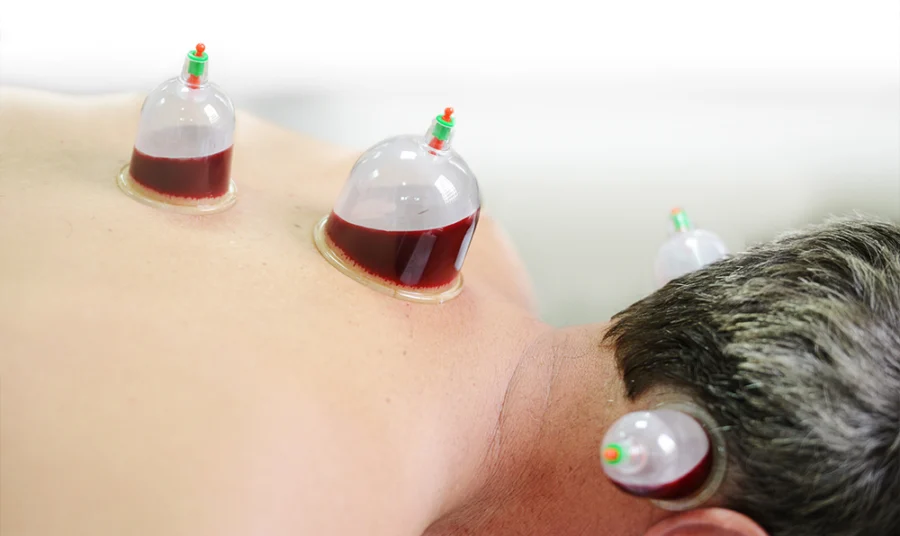
Dry and wet cupping
Hygiene, and who we will not treat
Wet cupping is an invasive procedure. Being clear about how we control risk — and when we decline to treat — matters more than any marketing claim we could make.
- Fresh, single-use disposable cups and blades for every patient — nothing that contacts skin is reused.
- Sterilised, sealed instruments opened in front of you.
- Treatment surfaces cleaned and re-covered between patients.
- Clinical waste disposed of separately, not in general refuse.
- Gloves worn for all wet cupping procedures.
- You take blood thinners (warfarin, heparin, clopidogrel) or have a bleeding or clotting disorder.
- You are pregnant — several cupping points are avoided entirely in pregnancy.
- There is an active skin infection, eczema flare or open wound at the treatment site.
- You have uncontrolled diabetes, severe anaemia, or are undergoing chemotherapy.
- You have had surgery in the area recently.
- You are under 12, unless referred by your doctor.
Alongside conventional care, not instead of it
Hijama may be considered alongside conventional treatment, after a medical assessment — not as a replacement for it. It is not a substitute for prescribed medication, physiotherapy, dermatological treatment or hair-loss treatments such as minoxidil, nor for surgical care such as a hair transplant. If your condition needs one of these, Dr. Siddiqui will tell you so at the consultation and, where appropriate, refer you on rather than begin treatment.
Our approach to evidence
Hijama has been used in traditional medicine for centuries. Modern research suggests it may help with certain conditions, although the strength of evidence varies depending on what is being treated, and there are no large clinical trials establishing it as a cure. During your consultation, Dr. Siddiqui explains where hijama may be appropriate, where the evidence is limited, and when another medical approach is more suitable for you.
What our patients say
One of the best centres in Delhi. Dr. Siddiqui is a humble professional with vast experience. The clinic is hygienic and systematic — everything they use is completely sterilised and disposable.
I have neck pain from cervical issues and their cupping therapy has really improved my condition. The doctor is very calm and gives accurate consultation. The follow-up here is great.
I was facing so many issues with my asthma. After taking medicine from Doctor Sahab I feel much better — I used an inhaler three times a day, now only once. Highly recommended.
I have completed my treatment plan and my skin issues have disappeared. Well-maintained clinic, cooperative and professional staff, a great experience overall.
This clinic has a professional and holistic approach to health. Highly recommended for health issues — the behaviour with all clients is very helpful.
Not sure if hijama is right for you?
The first consultation is free and there is no obligation to book. Ask Dr. Siddiqui directly about your condition.
Frequently asked questions
The questions patients actually ask us before their first session.
Does hijama cupping hurt?
Dry cupping feels like firm, pulling suction — uncomfortable rather than painful. For wet cupping, the small incisions are usually described as a brief scratch. Mild tenderness at the site for a day or two afterwards is normal and expected.
Are the marks permanent?
No. The circular marks are a temporary, controlled bruise caused by drawing blood to the surface. They typically fade within 7 to 10 days.
How many sessions will I need?
It depends entirely on the condition. Some patients notice a difference after a single session; chronic joint pain or hair-loss cases are usually reviewed across several visits. Dr. Siddiqui gives an honest estimate at the consultation rather than selling a fixed package upfront.
What does it cost?
The first consultation is free. Session pricing depends on how many areas are treated and is confirmed with you at that consultation, before anything goes ahead.
Is a female therapist available?
Yes. Experienced female therapists are available for women who prefer this, in a private treatment room. Please mention it when you book so we can schedule accordingly.
Can I have hijama while fasting?
Many patients choose to have hijama while fasting. Tell us when you book so the timing and the aftercare advice can be adjusted, particularly around hydration.
Is hijama safe with my medication?
Tell Dr. Siddiqui exactly what you take. Blood thinners such as warfarin, heparin or clopidogrel are a reason we will decline or modify treatment. Some Unani herbal remedies can also interact with prescription medicine.
How should I prepare?
Eat a light meal beforehand unless you are fasting, drink water, and avoid heavy exercise and alcohol that day. Wear something loose that gives easy access to the area being treated.
Where is the clinic and when are you open?
A-28/29, Abul Fazal Enclave Part 1, New Delhi 110025, in the Okhla area. Open 11:00 AM to 7:00 PM Saturday to Thursday, closed Friday.
Can diabetics have hijama?
If your diabetes is well controlled, yes — tell Dr. Siddiqui at the free consultation. Uncontrolled diabetes is one of the conditions we decline to treat, because it affects healing. See our safety policy for the full list.
How much blood is drawn during wet cupping?
A small quantity — far less than a blood donation. If you feel light-headed at any point, the session is stopped. Read more on our wet cupping page.
Can I drive and go back to work afterwards?
Most patients drive themselves home and return to normal daily activity the same day. We advise against the gym, swimming or heavy lifting for 48 hours, and keeping the treated area clean and dry for the first 24.
Can I continue physiotherapy alongside hijama?
Usually, yes. Tell us what you are already having so treatment can be scheduled around it. Hijama is generally considered alongside conventional care such as physiotherapy, not as a replacement for it.
What happens if hijama isn’t right for my condition?
Dr. Siddiqui will tell you so at the free consultation, explain why, and refer you to a conventional doctor where appropriate. We would rather lose a booking than treat someone we should not.
Abul Fazal Enclave, Okhla
Patients travel to us from across Delhi-NCR including Noida, Gurgaon, Faridabad and Ghaziabad.
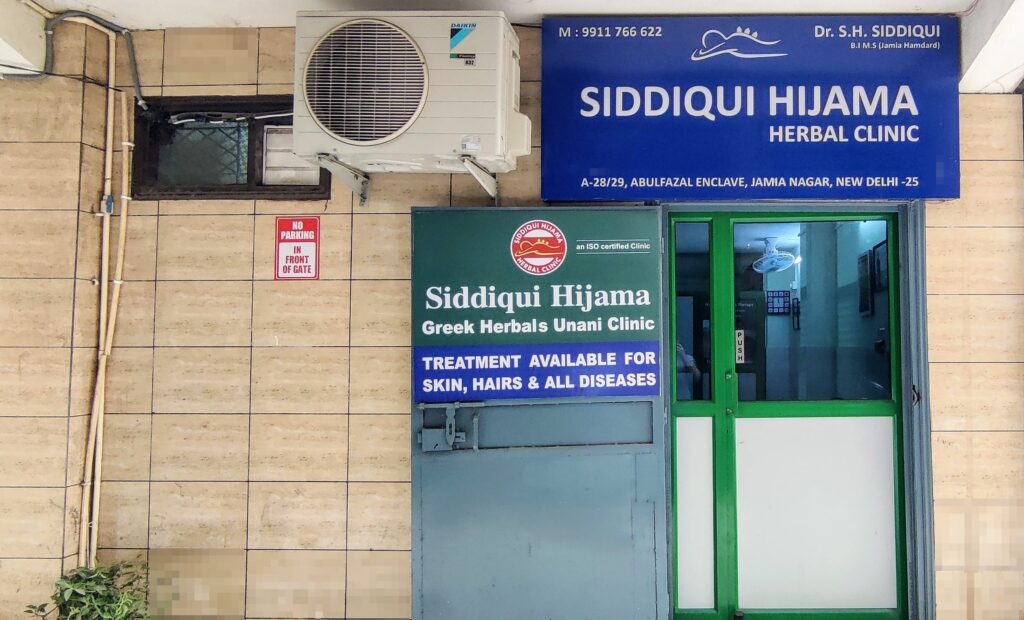
A-28/29, Abul Fazal Enclave Part 1, Jamia Nagar, Okhla, New Delhi 110025
+91 99117 66622 · +91 99907 37109
Get directions- Saturday11:00 AM – 7:00 PM
- Sunday11:00 AM – 7:00 PM
- Monday11:00 AM – 7:00 PM
- Tuesday11:00 AM – 7:00 PM
- Wednesday11:00 AM – 7:00 PM
- Thursday11:00 AM – 7:00 PM
- FridayClosed
Appointments are recommended, especially for wet cupping and when requesting a female therapist.