
Cupping for migraine and recurring headaches
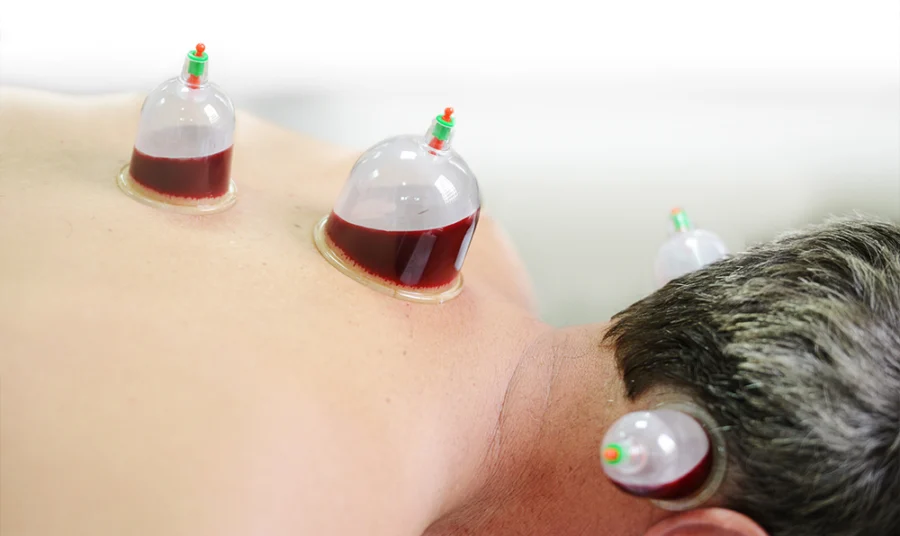
Cupping at the upper back, shoulders and head points is used to relieve the muscular tension and circulatory congestion that often sit behind recurring migraines.
Assessed by Dr. Saeedul Hasan Siddiqui, B.I.M.S. before any treatment begins.
Patients usually come to us with
If your situation is not on this list, ask anyway — the consultation is free and Dr. Siddiqui will tell you if hijama is not the right answer.
- Migraine two or more times a month
- Headaches that start at the neck or shoulders
- Pain with light sensitivity or nausea
- Tension headaches from screen work or stress
- Headaches that painkillers only briefly relieve
What happens at your appointment
Nothing is done before you have been assessed, and the assessment costs nothing.
Headache history
Frequency, triggers, timing and any medication you take. Bring a list if you keep one.
Neck and shoulder examination
Most recurring headaches have a muscular component at the base of the skull and across the shoulders.
Session
Cups on the upper back, shoulders and specific head points. Wet cupping is common for migraine when suitable.
Trigger and review plan
Sleep, hydration and posture advice, with a review after the second or third session.
What this treatment can and cannot do
Releases the neck and shoulder tightness that so often triggers the attack.
Patients most often report attacks becoming less frequent before they become less severe.
A drug-free option for patients who are wary of long-term painkiller use.
Sudden, severe or new-pattern headaches are referred for medical investigation, not cupped.
- Session length30–40 minutes
- Typical course3–5 sessions, 2–3 weeks apart
- MethodWet cupping on the upper back where suitable; dry cupping otherwise
- AftercareRest, hydration and no screen-heavy work for the rest of the day
Pricing is confirmed at your free consultation, once we know what you actually need. We do not sell fixed packages in advance.
- You take blood thinners, or have a bleeding or clotting disorder.
- You are pregnant.
- There is an active skin infection or open wound at the site.
- You have uncontrolled diabetes, severe anaemia, or are undergoing chemotherapy.

If hijama is not the right treatment for your condition, I will tell you at the consultation and refer you to a conventional doctor. I would rather lose a booking than treat someone I should not.
Dr. Saeedul Hasan Siddiqui, B.I.M.S.Cupping for migraine · Practising since 1981Cupping for migraine — your questions
Can cupping stop a migraine that has already started?
It can help during an attack, but most patients find it more useful between attacks, as a way of reducing how often they come.
How many sessions before I know if it works?
Give it three sessions. If there has been no change in frequency or severity by then, Dr. Siddiqui will tell you honestly and discuss other options.
Do I keep taking my migraine medication?
Yes. Never stop prescribed medication because of a cupping session. Tell us what you take — some medications affect whether wet cupping is suitable.
Are cupping marks visible on the neck?
Marks on the upper back are covered by most clothing. If you have an event coming up, tell us and the points can be adjusted.
Other things we treat
Cupping is used to increase blood flow to the scalp, so that the follicles receive more oxygen and nutrients. It is ofte…
Learn moreSuction cups applied along the back, shoulders and legs to release muscular tension, ease stiffness and improve circulat…
Learn moreTargeted cupping around the knee to reduce inflammation and swelling, ease stiffness on stairs and after sitting, and im…
Learn moreNot sure if hijama is right for you?
The first consultation is free and there is no obligation to book. Ask Dr. Siddiqui directly about your condition.