Hair fall treatment with hijama and Unani medicine
For men and women with excessive hair fall, thinning at the crown, dandruff or stress-related shedding. Hijama is traditionally used in Unani medicine to improve local circulation to the scalp, and is often combined with herbal treatment. It is not a cure for every type of hair loss, which is why every patient is assessed by Dr. Saeedul Hasan Siddiqui, B.I.M.S. before any treatment is recommended.
- Free first consultation, no obligation to book
- Assessed by a registered Unani physician practising since 1981
- An individual plan — we do not sell fixed packages in advance
Assessed by Dr. Saeedul Hasan Siddiqui, B.I.M.S. before any treatment begins.
Patients usually come to us with
If your situation is not on this list, ask anyway — the consultation is free and Dr. Siddiqui will tell you if hijama is not the right answer.
- Hair fall that has increased over the last few months
- Thinning at the crown or a widening parting
- Dandruff, itching or an oily, flaky scalp
- Hair loss after illness, childbirth or high stress
- Patchy loss (alopecia areata) confirmed by a doctor
What happens at your appointment
Nothing is done before you have been assessed, and the assessment costs nothing.
Scalp and history review
Dr. Siddiqui looks at the pattern of loss, how long it has been going on, and checks for causes such as anaemia, thyroid problems or medication.
Points selected
Cupping points are chosen on the scalp and upper back, where circulation to the head is most easily influenced.
Session
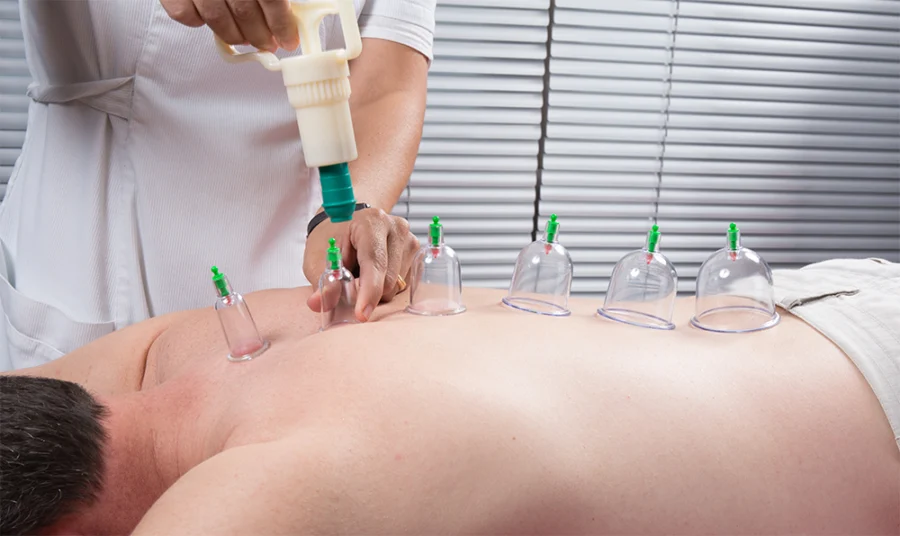
Cups are applied for 5–10 minutes per point. Wet cupping may be used on the upper back rather than the scalp itself.
Herbal support and review
Where useful, a Unani oil or internal remedy is prescribed. Progress is reviewed after 3–4 weeks — hair responds slowly.
What this treatment can and cannot do
- Reduced shedding — usually noticed before any regrowth.
- A cleaner scalp where oiliness, flaking or itching is a problem.
- Improved local circulation to the treated area.
- Unani oils or internal remedies matched to your particular cause.
- It cannot revive a follicle that has been dead for years.
- Hair grows only about 1 cm a month, so change is gradual, never immediate.
- Results vary. Some patients see no benefit, and we will say so.
- It is not a replacement for dermatological care where that is needed.
- Session length30–40 minutes
- Typical course4–6 sessions, 2–3 weeks apart
- MethodDry cupping on the scalp, wet cupping on the upper back where indicated
- AftercareNo hair oil or wash for 24 hours; written instructions provided
Pricing is confirmed at your free consultation, once we know what you actually need. We do not sell fixed packages in advance.
- You take blood thinners, or have a bleeding or clotting disorder.
- You are pregnant.
- There is an active skin infection or open wound at the site.
- You have uncontrolled diabetes, severe anaemia, or are undergoing chemotherapy.

If hijama is not the right treatment for your condition, I will tell you at the consultation and refer you to a conventional doctor. I would rather lose a booking than treat someone I should not.
Dr. Saeedul Hasan Siddiqui, B.I.M.S.Hijama for hair · Practising since 1981What the evidence says
Published research on cupping for hair loss is limited. Long clinical use in Unani practice, and a small number of studies, point to improved local circulation and relief of scalp symptoms such as flaking and itching. There are no large clinical trials establishing hijama as a treatment that regrows hair.
For that reason we describe hijama as supportive rather than curative, and we do not promise regrowth. Treatment is decided case by case after assessment. Where hair loss has a cause that cupping will not address — a thyroid disorder or anaemia, for example — you will be told and referred to the right doctor.
Hijama for hair — your questions
How soon will I see less hair fall?
Most patients notice reduced shedding before they notice regrowth — usually within three to four weeks. Visible regrowth, where it happens, takes three months or more because of how slowly hair grows.
Will cupping regrow hair on a bald area?
Where the follicle has been dead for years, no treatment can restore it, and we will tell you that at the consultation rather than sell you sessions. Cupping is most useful for thinning, recent loss and shedding.
Are the marks visible in my hair?
Scalp cupping marks are hidden by hair in almost all cases and fade within a week. Marks on the upper back are covered by clothing.
Can I have this with hair oil or minoxidil?
Yes. Tell us what you are already using so the aftercare and any herbal prescription do not conflict with it.
Does it hurt?
Dry cupping on the scalp is a firm pulling sensation rather than pain. Where wet cupping is used on the upper back, the small incisions are usually described as a brief scratch. Tell us at any point if you are uncomfortable and the session is stopped.
How many sessions will I need?
Typically four to six sessions, two to three weeks apart, with progress reviewed at three to four weeks. You are not asked to commit to a course in advance, and we do not sell fixed packages.
Can women have hijama for hair fall?
Yes. Experienced female therapists and a private treatment room are available — mention it when you book so the appointment is scheduled accordingly. See hijama for ladies.
I have diabetes. Can I still have it?
Uncontrolled diabetes is one of the conditions we decline to treat, because it affects healing. If your diabetes is well controlled, tell Dr. Siddiqui at the free consultation and he will assess whether treatment is appropriate. See our safety policy.
Will it help alopecia areata?
We treat patchy loss where the diagnosis has been confirmed by a doctor. Response varies between patients and we will not promise regrowth. If we do not think it will help you, we will say so at the consultation.
When should I avoid hijama altogether?
If you take blood thinners or have a bleeding or clotting disorder, are pregnant, have an active skin infection or open wound at the site, have uncontrolled diabetes or severe anaemia, or are undergoing chemotherapy. Always bring your full medication list. Full details on our safety page.
What is the aftercare?
No hair oil and no hair wash for 24 hours. You are given written instructions before you leave, and you can call or WhatsApp the clinic with any question afterwards at no charge.
Other things we treat
Suction cups applied along the back, shoulders and legs to release muscular tension, ease stiffness and improve circulation in areas painful for months or years.
Learn moreHerbal remedies prescribed for the internal causes of hair fall — often used alongside scalp cupping rather than instead of it.
Learn moreA private treatment room and experienced female therapists, for women who prefer it. Used for hair fall, migraine, back pain, PCOS-related complaints, acne and general fatigue.
Learn moreUnsure whether hijama is appropriate for you?
Not every type of hair loss benefits from hijama. At your free consultation Dr. Siddiqui will assess the cause of your hair fall, tell you whether treatment is appropriate, and say honestly if another medical approach would serve you better.